cleaning day

Spring has arrived, and its tradition, it has brought with it everything that is synonymous with this time of year: sunshine, daylight savings, flowers, showers, and the urge to freshen up household spaces with a little spring cleaning.

A little spring freshening of your household can not only spruce up your home’s appearance, it can boost your home’s value, add curb appeal, and help encourage your neighbors to do the same.

Here are five ideas spring cleaning your household.

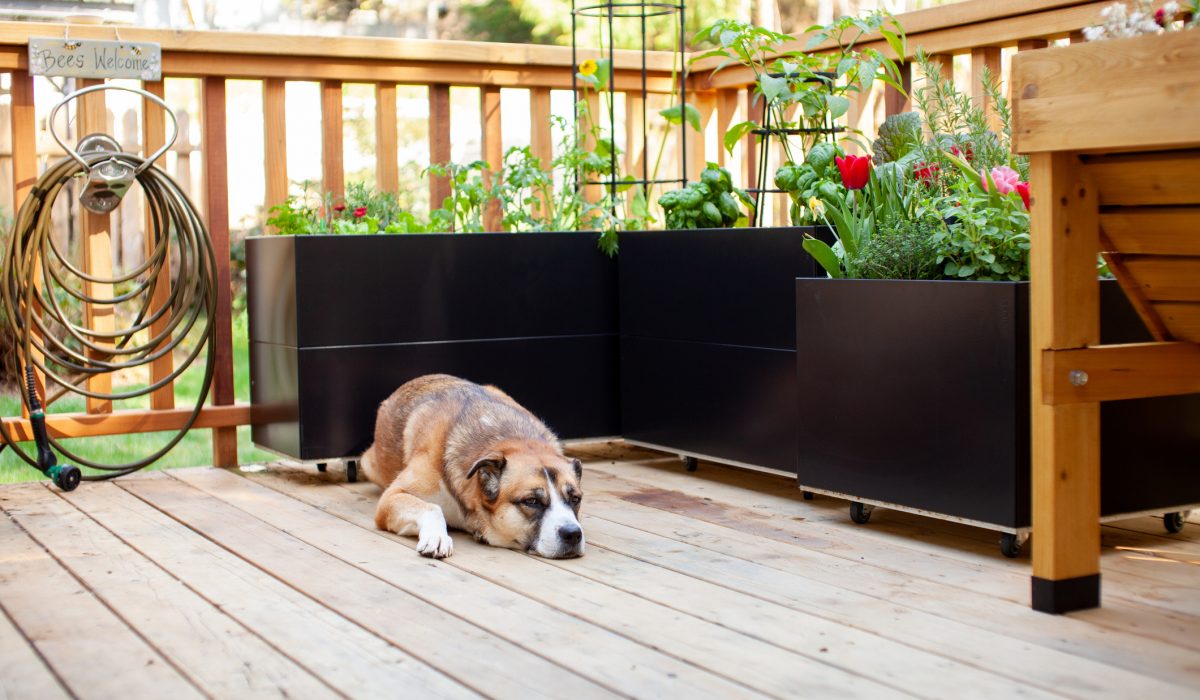
1. Freshen up your home’s curb appeal.  Your home’s front yard and entry is the first thing people see when they come to visit, yet it is often neglected because homeowners enter their home from the garage and not the front door.  Make your entry more inviting by sweeping up the front porch, patio, or entry, removing cobwebs and dust from the front of the home, and cleaning or power washing the exterior and front-facing windows.  If you are feeling extra ambitious, add a fresh coat of paint to the front door, replace the doormat, add some potted flowers, and revive the front porch seating with new furniture cushions.

2. Clean your home’s windows. Nothing will freshen up your home quicker than a good window washing.  Washing your windows allows more of the daylight in, brightening your home and instantly creating a sunnier, friendlier space.  While you are up on the ladders cleaning away, you may also want to consider giving the blinds a good dusting and the window treatments a good washing. Also, don’t neglect the screens.  Spritz clean, remove of bugs, and repair broken or torn areas.

3. Dust off hard-to-reach places.  Hard-to-reach places often get neglected by the daily and weekly cleaning regimen. Use this opportunity to dust off light fixtures, fans, floorboards, and other hard-to-reach places such as under the beds and behind couches and end tables.

4. Organize your garage.  Over the course of the year, garages tend to get neglected while the stuff inside them continues to pile up.  Spring is the perfect time to clean and organize this space because the warmer weather allows you tackle the mess with doors wide open, while also adding much need space to store and retrieve your favorite spring and summer gear such as tents, bicycles, coolers, camp chairs, and kayaks.

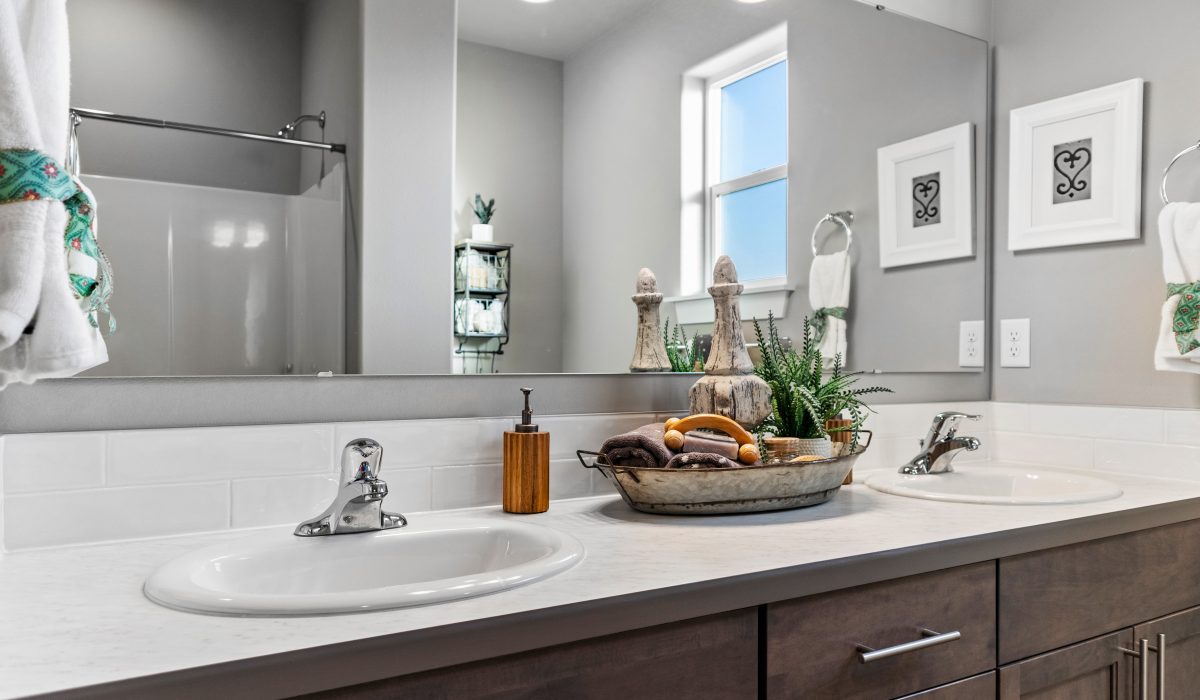
5. Spruce up the main spaces.  Go through the shared spaces of your home and remove anything that’s off-season, too heavy for the room’s visual, unnecessary, or very bulky.  Simply ridding your home of the extras can spruce up any space, making your home appear brighter, lighter, and cleaner.  For the smaller things you reach for all the time, look for storage solutions that will tackle the clutter without impeding on convenience, such as magazine racks, charging stations, and mudroom lockers.

Bonus Tip: Tackle the paper clutter.  We all have a place where paper clutter congregates.  Spring is the perfect time to go through old files and rid of old bills, statements, assignments, and other paper clutter.  Since spring comes just after tax season, it’s easier to know what items you can purge, and start fresh for the new year.  You can even opt to scan in your important papers which will help you rid of paper clutter altogether (just remember to backup those files!).

There’s nothing like a little sweat and elbow grease in the mild temperatures and spring sunshine to motivate you to freshen up your home. Tackling these cleaning tasks will make your home fresh, clean, and inviting, and allow you to relax the rest of the spring and summer away!

Tags: , , ,

new small homes“You know you have reached perfection of design not when you have nothing more to add, but when you have nothing more to take away.” – Antoine de Saint-Exupéry

In the 1950’s, the average home size was around 1,000sq ft. But by the turn of the 21st century, that number doubled to almost 2,500sq ft, despite the fact that family size in the US had actually declined.

Then the recession came, and by 2008, many families were forced to do more with less: less income, fewer work hours, and smaller homes.  But as the saying goes, “A door is never shut where a window is not opened,” some Americans found that “sizing down” had its benefits, and as the housing market begins to recover once again, many families are purposely choosing this lifestyle and selecting smaller floor plans.

The benefits of simple living in smaller spaces is not always obvious.  Sure, most homeowners are aware that smaller homes mean a smaller mortgage upfront.  But few think of the time, social, and environmental benefits of smaller living.  If you’ve never considered downsizing your home, or if you are trying to decide what size home to purchase, consider these benefits of homes with smaller square footage:

  • Smaller homes force out the excess clutter.  Living in a small home creates a mentality of keeping only what is needed or important.  Generally, homeowners have to choose to keep only what is “useful or beautiful.” This forces homeowners to buy less, carefully consider all purchases, and purge unneeded items in order to make the most of their square footage.
  • Smaller homes are easier to clean.  Homeowners of small spaces will tell you that having a small home means less time vacuuming large floors, cleaning multiple bathrooms, and scrubbing miles of counter top.  Because everything has its place, homeowners tend to feel more organized, and are able to find and put away items more quickly.  That means less time spent cleaning up, and more free time to spend recreationally.
  • Smaller homes are more energy efficient.  Smaller spaces mean less energy to heat and cool the home, which means a smaller carbon footprint, and lower utility bills.  Small square footage, when paired with energy efficient appliances, quality insulation, and energy efficient building practices, can save homeowners thousands over the life of their residency.
  • Smaller homes have lower property tax.  Because assessed property value takes into account the square footage of the home and the lot, generally smaller homes have lower property taxes.
  • Small homes force us to get out.  Living in a smaller space encourages homeowners to make the most of their surrounding community, parks, and local recreation.  When there’s not a separate room in the house for each person to watch their own TV program, family members are forced to come up with other ways to entertain themselves, often together.
  • Small homes promote family time.  Sharing a small space can promote togetherness.  After all, a smaller home means a singular space for homework, dinner, and family time.  Sharing a room can bring siblings closer together, and shared family spaces can help spark interaction among family members.
  • Smaller homes are generally designed well.  Because every detail needs to be thought out from storage space to floor plan design, smaller homes promote innovative design.  Space limitations challenge creativity and versatility: a nook becomes a reading corner, a closet becomes a home office, and a kitchen island becomes a butcher block for food preparation.
  • Small homes are cheaper to maintain.  Roofing, painting, and maintaining a 2,500 sq ft home can become a small investment.  Smaller homes have lower costs to maintain and often allow a homeowner to tackle the project him/herself, because the square footage of the project is less overwhelming.
  • Small homes are cheaper to build, and cost less to upgrade.  Most houses are priced by square footage, meaning that the overall cost to build a smaller home is less.  Less home means less concrete, wood, flooring, ducting, and roofing. In addition, homeowners can opt for higher-grade materials—such as granite counter tops or travertine flooring—because the square footage of the kitchens and bathrooms are dramatically lower, driving costs down.

Downsizing requires homeowners to rethink their way of living and simplify their home life.  But this endeavor can ultimately lead to a higher quality of life because it frees up time, money, and stress, while giving homeowners a chance to bond closer with their community and family.

Tags: , , , ,

New Home Being Framed

“We hear the train coming…it’s coming around the Bend (pun intended!)…” and if first time home buyers don’t hop on this train, they may miss out on all the opportunities the housing recovery has to offer.

Those who have been able to take advantage of the housing recovery have been able to benefit from low interest rates, reasonable housing prices, and almost-instant equity.  But only about 35 percent of people benefiting from these opportunities are first time home buyers.

The reduced number of new home buyers in the market are directly related to the decreased number of non-distressed homes on the market, experts say.  A dramatic increase in non-foreclosure/short sale listings, and an increase in new home inventory seems to have scared off first time home buyers.

However, it should be doing the exact opposite!  New homes and non-distressed existing homes may be perceived as less of a deal by new home buyers, however they are often in better shape than distressed homes, and come with disclosures and warranties that distressed homes do not.

This decline surfaces as purchases of non-distressed homes–houses that are not in foreclosure–have increased dramatically in 2012. The report shows that the vast majority of the homes being sold are regular purchases–accounting for 64.7 percent of all houses sold in October, up from 55.7 percent in February. The increase is a sign of strength in the housing market, as fewer people are buying homes in foreclosure.

But according to the survey, first-time buyers are the only group that has not purchased more non-distressed properties in the last five months. Meanwhile, current homeowners are picking up an increasing number of properties, purchasing 54.4 percent of all homes in October, up from 50 percent in June.

Via “First-Time Homebuyers Missing Out on Housing Recovery.”

Though some claim that first time home owners are scared to enter the housing market because of a housing crisis hangover that has left them weary of investing, others argue that there has never been a better time to buy because of low interest rates and recovering home prices.

Either way, one thing is for sure: people are being more selective about what they buy to help ensure they won’t be burned.  That’s why it’s more important than ever for first time home buyers to invest in properties and neighborhoods that are desirable, growing, and have the potential to increase in value.  That’s why Hayden Homes is seeing an increase in home buyers interested in investing in a new home in one of our many desirable neighborhoods across the Northwest.

If you are interested in seeing what kind of new homes we have to offer in a neighborhood near you, check out our new home inventory and neighborhoods online.

Tags: , , , , ,

For the first time, finances and not diet and exercise made the top of Americans’ New Year’s Resolutions lists. More and

Save Money

more Americans are looking for ways to save money in 2013 so they can be more financially fit, save more money, or possibly make that investment in a new home this year.

Inspired by an article written by Ken Torrino for New York City Real Estate, “5 Money-Saving New Years Resolutions for Your Home,” we thought we’d pass along some ideas for how to save money on household-related items in 2013.  These five simple tasks take less than an hour to perform, but can mean big savings for homeowners in the long run.

1. Change your filters.  Clogged filters are not only reduce air quality, they can also compromise the efficiency of your heating or cooling system by 15-20 percent.  New filters, which cost just a few dollars, can save you big dollars in the long run on your energy bills and service on your heating and cooling systems.  Plus, new filters will improve the air quality and create a healthier habitat within your home.

2. Get rid of the extra fridge.  Refrigerators use a lot of energy, especially the extra ones that often reside in the garage.  Getting rid of an old fridge will not only save you money on your electric bill, you can also get $40-50 cash and free removal of your fridge from companies like Energy Star of Oregon in exchange for forfeiting your old refrigerator.

3. Get new quotes on homeowner’s insurance.  It’s a good idea to shop around for homeowner’s hazard insurance every couple years.  There are potential savings for everything from your credit rating, to improvements to your home, to what type of dog you own.  You can shop around for rates and discounts that can be combined with your other insurance policies as well (such as auto and life insurance) and save even more.

4. Have a home energy review or home energy audit performed.  Most utilities in the Northwest offer free home energy audits to customers.  A trained technician will come out to your house and identify ways your home can be more energy efficient, which will save you big money on your electric, gas, and water bills.  In fact, minor improvements such as replacing weatherstripping, re-caulking windows, and replacing shower heads with water-reducing options can lead to huge savings.

5. Replace broken down appliances with energy-efficient ones.  If you are planning on purchasing a new appliance in 2013, replace them with today’s more energy-efficient options.  Water and energy-efficient appliances really do save money!  In fact, they can pay for themselves in almost no time. The older the appliance replaced, the more cost savings you will see, so start with the oldest and work your way from there!

Tags: , , , , ,

« Older entries